Get in touch to start winning online 310 362 6373

Contact us today
for a no-pitch consult
Contact Form
As seen on







Give Yourself An Edge With An Agency That
Speaks The Same Language As Google and Facebook:
When Facebook and Google hired people to build their advertising platforms, they didn’t look to the world of advertising and marketing. They hired engineers and mathematicians who speak a completely different language — advanced statistical analysis, modeling, multi-variant testing…
Digital Spotlight was founded by a pair of data-loving mathematicians. Since 2008, we’ve been growing a massive dataset with information collected from investing millions of advertising dollars for over 1,812 businesses across 355 niches.
We use the same advanced math that Facebook and Google use to unlock the insights in a decade of priceless data. We use it to tune your advertising campaigns to deliver a stream of hot, qualified leads at an unbeatable cost of acquisition.
How would you like your new leads?
We pack a lean but impressive arsenal, using only tools and strategies proven to
significantly generate sales and improve your return on investment.








Mixing people and math
The numbers we care about most are your numbers. That’s why there’s always a real person at the end of the phone. We always want to be listening to you and refining your campaigns, to be sure the leads we’re sending you convert into business.
Our Client Success Stories
We want to be always listening to you and refining your campaigns to be
sure the leads we’re sending you convert into business.

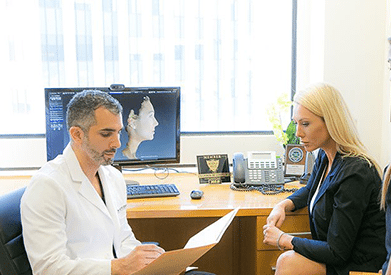


Want A Pitch-Free Consultation With An Expert?
Nobody does more consulting upfront than we do. We work only for clients we know we can help, so we don’t pitch anything until we’ve listened and talked about what’s realistic.
If you want a no-pitch consultation with an expert about whether SEO, Google Ads, Facebook or Bing advertising is right for your business, let’s talk about it.
USA - Contact
 Find us
2450 Colorado Avenue,
Suite 100E
Santa Monica, CA 90404
 Call
Call
310 362 6373
 Email
Email
contact@digitalspotlight.com
Asia Pacific - Contact
Find us
Suite 2, Level 18, 45 Clarence St. Sydney NSW 2000, Australia
Call
1300 891 181
Email
contact@digitalspotlight.com